Explainers ·
El Niño: What does it mean for the Great Barrier Reef?
The Bureau of Meteorology has declared an El Niño event for Australia, with forecasts pointing to a hot, dry summer and warmer ocean temperatures. So, what is El Niño and what impact could it have on the Great Barrier Reef?

Australia's Bureau of Meteorology has declared an El Niño event — one that forecasters warn could rank among the strongest on record. For the Great Barrier Reef, the timing is serious.
El Niño brings hotter, drier conditions across much of Australia and raises the risk of marine heatwaves. But this event is arriving in ocean waters already running abnormally warm, compounding pressure on a Reef system still recovering from recent coral bleaching events.
While these conditions increase pressure on coral reefs, they also reinforce the urgency and importance of the work underway to better understand coral resilience, protect vulnerable ecosystems and support the Great Barrier Reef’s recovery in a changing climate.
#What is El Niño weather?
El Niño is a climate phenomenon characterised by the periodic warming of sea surface temperatures across the Pacific Ocean. During an El Niño event, the trade winds, which usually blow from east to west along the equator, weaken or reverse displacing warm waters eastwards that are typically confined to the western Pacific Ocean. This can greatly alter the atmosphere and have significant impacts on weather and climate around the world.
El Niño typically brings warmer, drier atmospheric conditions and reduced cloud cover, which increase the risk of droughts, bushfires and coral bleaching.
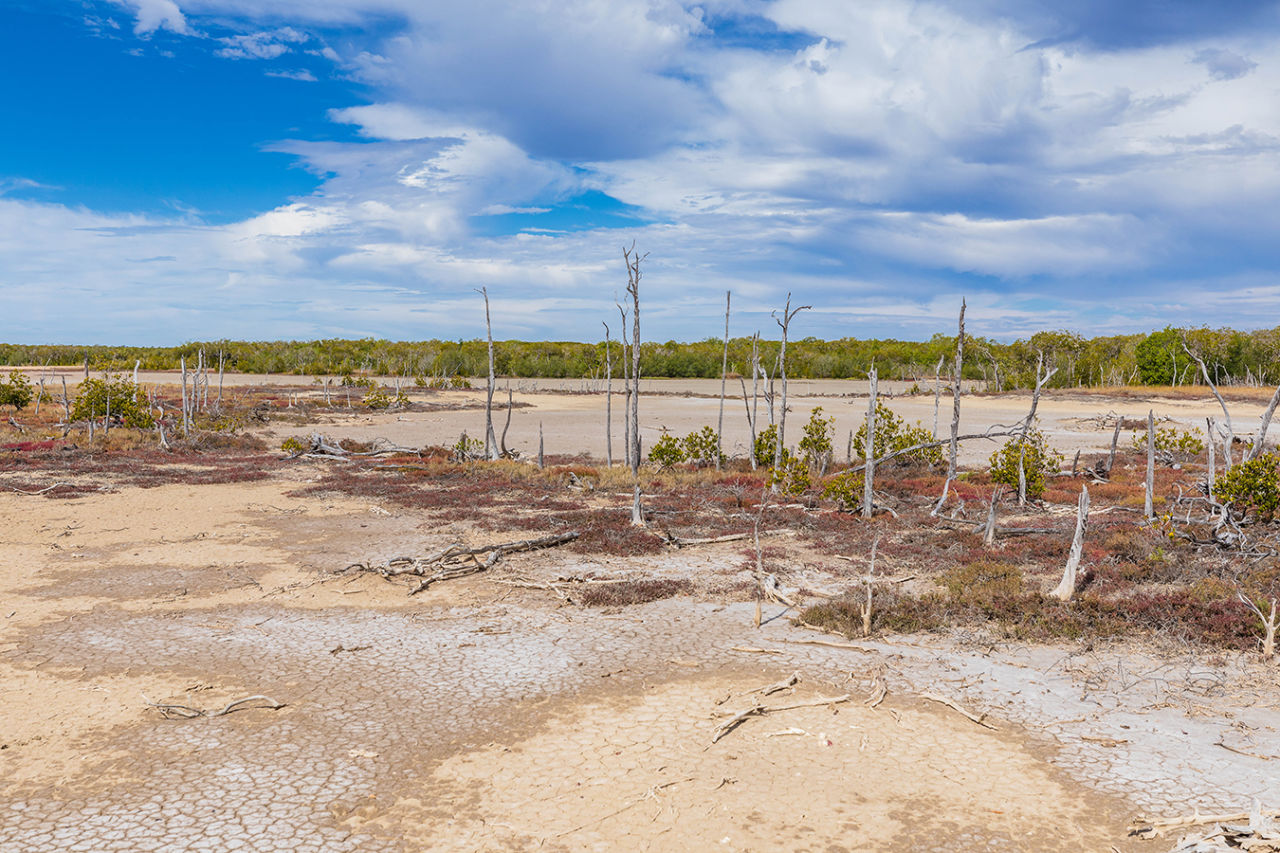
Dry wetlands in St Lawrence, Central Queensland, Australia. Credit: Playful Lens.
#How could El Niño could affect the Great Barrier Reef?
El Niño summers are of great concern for the health of our Great Barrier Reef. Higher than average ocean temperatures can cause heat stress for corals, which can lead to mass coral bleaching events.
When corals bleach, they eject the algae that live in their tissues. This causes their tissues to become transparent, exposing their white skeleton underneath. Bleached corals are not dead but, as the algae provides most of their food, they are more at risk of starvation and disease.
Corals can recover from bleaching over time, but only when stressors are reduced, such as if temperatures drop and conditions return to normal. If the environmental stress continues, corals begin to die.
Coral bleaching disrupts the entire Reef ecosystem, causing a loss of critical habitats that serve as important feeding and nesting grounds for thousands of marine species.
The Great Barrier Reef has seen multiple mass bleaching events between 1998 and 2025, the worst of which was in 2016/17. While not an El Niño summer, 2017 was the hottest year ever recorded without El Niño conditions.
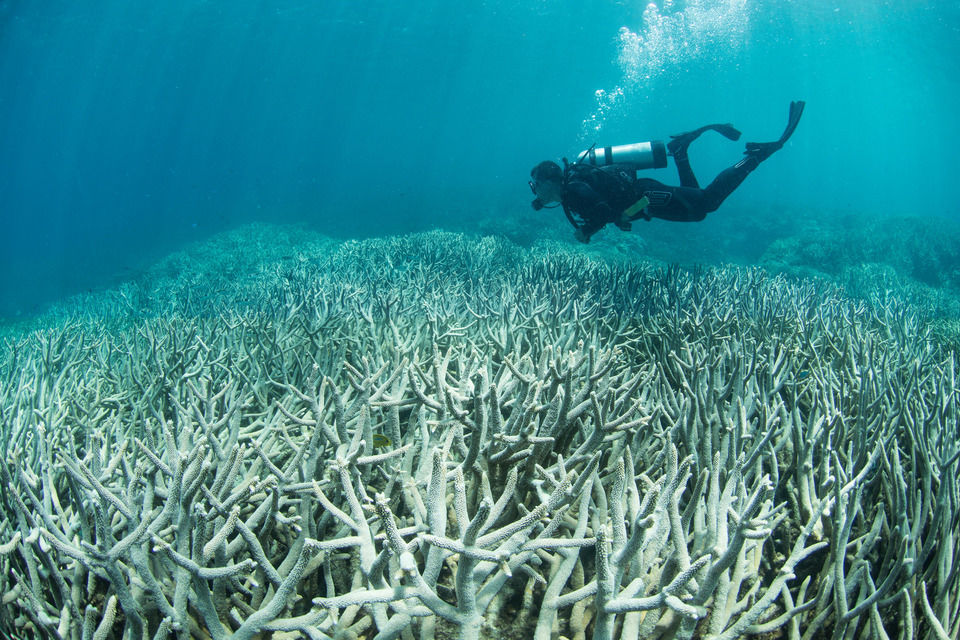
Bleached corals on the Great Barrier Reef. Credit: The Ocean Agency
#How can we protect our Reef from a changing climate?
Climate change is the biggest threat to the Great Barrier Reef and coral reefs around the world. The science clearly shows we have less than 10 years left to act for coral reefs on our planet. Reducing global emissions is no longer enough to safeguard reefs, we must also accelerate our efforts to protect our ocean habitats, restore coral reefs and help them adapt to the impacts of climate change.
That’s why we’re delivering breakthroughs in marine and terrestrial restoration, paving the way for blue carbon and biodiversity credit markets, improving how we monitor and protect the Reef and harnessing the unique role local communities and First Nations Peoples play in conservation.
The Reef Restoration and Adaptation Program (RRAP) is the largest research and development effort of its kind on the planet and it’s our best hope of saving coral reefs. Right now, we’re pioneering ways to:
· Produce heat-tolerant corals that can better cope with higher water temperatures.
· Preserve a diverse collection of coral species through innovative and scaled up cryopreservation technologies, so we can use them to grow corals outside of limited natural reproduction windows.
· Investigate new methods to stabilise damaged reef surfaces where corals have turned into rubble, to allow new corals to grow on them.
· Unlock the blue carbon potential for the Great Barrier Reef to help mitigate the impacts of climate change.
Want to know more? https://www.barrierreef.org/what-we-do/restoring-coral-reefs
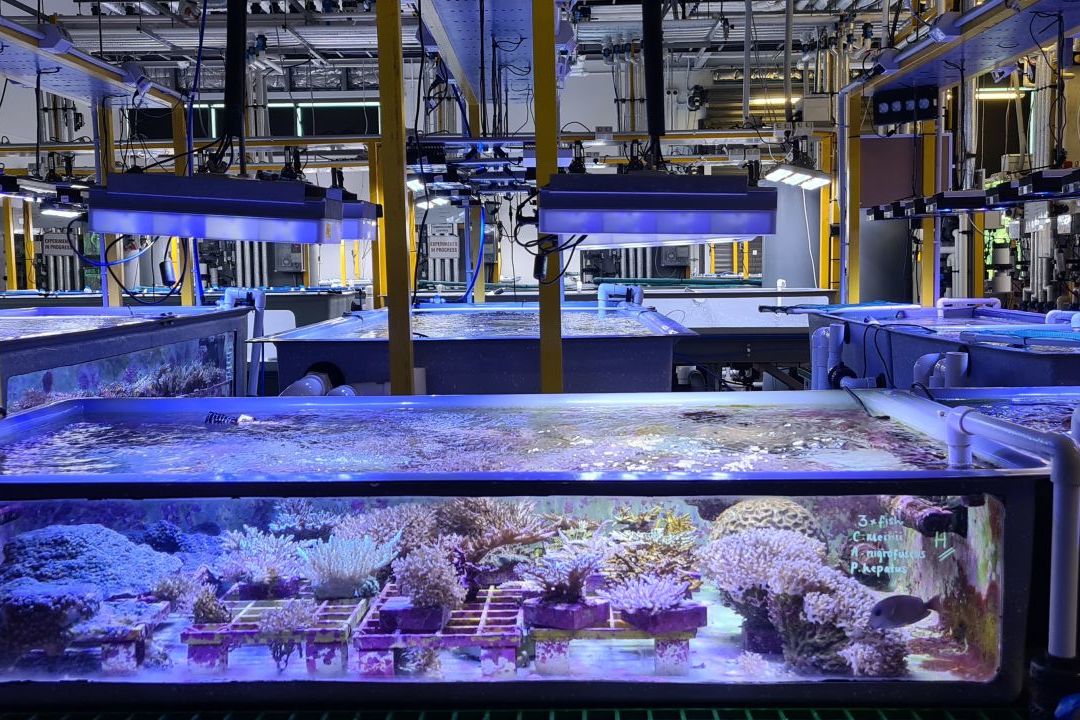
Young corals growing inside the specialised aquarium facility at the Australian Institute of Marine Science.
#Related
Explainers ·
What is seagrass?
Explainers ·
Why do humpback whales migrate?
Explainers ·
What is coral bleaching?
Explainers ·